
The price gap between new and used commercial laundry equipment can be substantial—sometimes 40-60% less for pre-owned units. For businesses operating on tight budgets or testing new markets, that difference seems like an obvious opportunity. But the real question isn’t whether used equipment costs less upfront. It’s whether that initial savings translates into genuine long-term value or sets you up for expensive surprises down the road.
Understanding when used laundry equipment commercial makes sense—and when it doesn’t—requires looking beyond the price tag to factors like equipment history, remaining service life, parts availability, and the total cost of ownership over the next 5-10 years.
The True Cost of Used Commercial Washing Machines
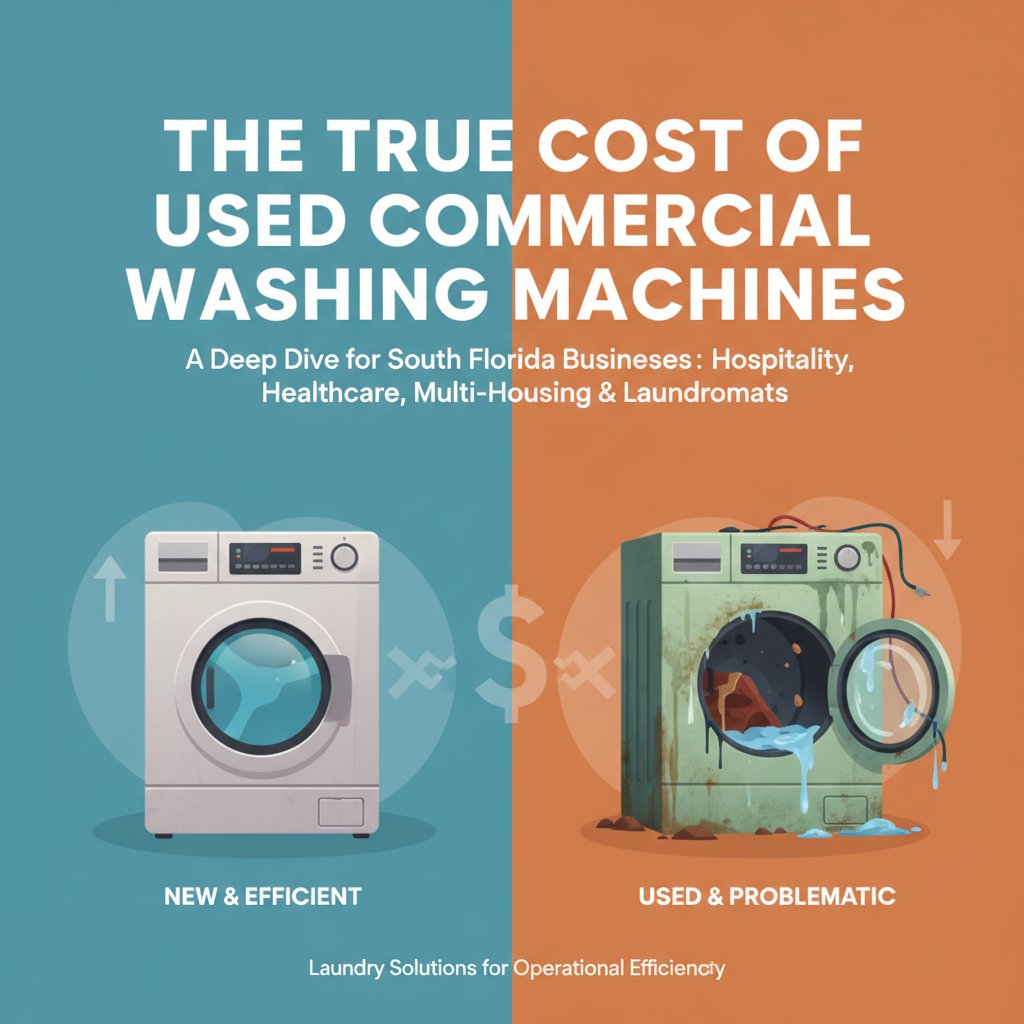
When evaluating used commercial washing machines, the sticker price represents just one piece of a much larger financial picture. A washer that’s been running in a high-volume hotel laundry for eight years has accumulated significant wear on bearings, seals, suspension systems, and control boards—even if it still operates.
Commercial washers are designed for specific cycle counts. A typical hard-mount washer in institutional use might be rated for 15,000-20,000 cycles before major components need replacement. If you’re buying a machine that’s already completed 12,000 cycles, you’re purchasing equipment that’s 60-80% through its expected lifespan. That remaining 20-40% might represent only 2-3 years of operation in a busy facility.
The math changes dramatically when you factor in:
- Service calls: Older equipment breaks down more frequently, and emergency service costs 2-3 times more than scheduled maintenance
- Parts availability: Discontinued models may require expensive custom fabrication or extended downtime waiting for scarce components
- Energy efficiency: Machines from the early 2010s consume 20-30% more utilities than current models with advanced extraction and water management
- Lost productivity: Slower cycle times and frequent repairs reduce your facility’s throughput capacity
A used 60-pound washer purchased for $8,000 might seem like a bargain compared to a $15,000 new unit—until you spend $3,500 on repairs in year two, face 15% higher utility costs monthly, and need replacement by year four instead of year ten.
Refurbished Commercial Laundry Equipment: The Middle Ground
Refurbished commercial laundry equipment occupies a different category than simply “used.” Legitimate refurbishment involves comprehensive inspection, replacement of worn components, testing to manufacturer specifications, and often includes a limited warranty.
Quality refurbishment programs typically include:
- Complete teardown and inspection of mechanical systems
- Replacement of bearings, seals, belts, and other wear items
- Testing of electrical components and controls
- Calibration to original specifications
- Fresh paint and cosmetic restoration
- 90-day to one-year warranty coverage
The challenge lies in distinguishing genuine refurbishment from superficial cleaning. A reputable refurbisher will provide detailed documentation of work performed, parts replaced, and testing results. They should also disclose the machine’s age, original application, and estimated remaining service life.
For commercial laundry equipment South Florida businesses, working with refurbishers who understand local building codes, water conditions, and climate factors adds another layer of value. Equipment that performed well in a Northern climate may require modifications for South Florida’s humidity, water hardness, and ventilation requirements.
Questions to Ask About Refurbished Equipment
Before committing to refurbished equipment, get clear answers to these questions:
- What is the machine’s manufacturing date and total operational hours?
- Where was it previously used, and in what application?
- Which components were replaced during refurbishment?
- What warranty is included, and what does it cover?
- Are OEM parts still available for this model?
- Who will service the equipment if problems arise?
- Does the equipment meet current utility efficiency standards?
When Used Equipment Makes Business Sense
Despite the risks, certain situations favor purchasing used laundry equipment commercial. The key is matching the equipment’s condition and remaining lifespan to your specific business needs.
Startup Operations Testing Market Viability: If you’re opening a laundromat in an unproven location or testing a niche market, used equipment reduces initial capital exposure. If the concept doesn’t work, you haven’t invested $200,000 in brand-new machines. However, this strategy only works if the equipment is reliable enough to create a positive customer experience.
Temporary or Seasonal Operations: Facilities with short-term needs—such as temporary housing, seasonal resorts, or construction site laundries—may not operate equipment long enough to justify new purchases. Used machines can provide adequate service for 2-3 year operational windows.
Low-Volume Applications: Small facilities processing 200-300 pounds daily won’t stress equipment the way high-volume operations do. Gently used machines from similar low-volume environments can deliver years of reliable service at substantial savings.
Specific Budget Constraints: Sometimes capital simply isn’t available for new equipment. In these cases, carefully selected used machines from reputable sources beat delaying necessary upgrades or operating with completely failed equipment.
The Hidden Value of New Equipment
New commercial laundry equipment carries advantages that become more valuable over time, even though they’re harder to quantify on day one.
Warranty Protection: Comprehensive warranties covering parts and labor for 3-5 years eliminate uncertainty during the critical early operational period. You can budget accurately without surprise repair expenses.
Modern Efficiency: Current washers with high G-force extraction (300-400 Gs) remove substantially more water than older models. This translates to 20-40% shorter drying times, reduced gas or electric costs, and higher throughput. The utility savings alone can offset the higher purchase price within 3-4 years.
Parts Availability: Current models enjoy full parts support from manufacturers and distributors. Repairs happen quickly, minimizing downtime. This advantage extends 10-15 years with popular models from major manufacturers.
Technical Support: Factory training for service technicians focuses on current equipment. Your local service provider’s expertise will be strongest with newer models they see regularly.
Programmability and Controls: Modern machines offer sophisticated programming for different fabric types, soil levels, and chemical injection sequences. This flexibility improves wash quality and reduces rewash rates.
Evaluating Used Equipment Before Purchase
If your situation genuinely favors purchasing used equipment, thorough evaluation protects your investment. Never buy used commercial washers or dryers without inspection by a qualified technician familiar with that brand and model.
A proper inspection should assess:
- Structural integrity: Check the frame, cabinet, and mounting system for cracks, corrosion, or damage
- Drum condition: Inspect for wear, pitting, or damage to the inner drum and door seal
- Bearing wear: Listen for unusual noise and check for excessive play in the drum assembly
- Control systems: Test all cycles, temperatures, and programmable functions
- Water systems: Examine valves, pumps, and connections for leaks or corrosion
- Electrical components: Verify proper operation of motors, heating elements, and safety systems
Request documentation including the machine’s age, service history, and reason for sale. Equipment from facility closures or upgrades typically shows less wear than machines sold because they’ve become unreliable.
The Service Partnership Factor
Perhaps the most overlooked aspect of used equipment purchases is ongoing service support. Commercial laundry equipment requires regular maintenance and occasional repairs regardless of age—but older equipment needs more frequent attention.
Before buying used machines, confirm that qualified service providers in your area work on that brand and model. Some distributors and service companies won’t support equipment they didn’t sell, leaving you scrambling for help when problems arise.
In South Florida’s competitive commercial laundry market, having an established service partner who knows your equipment, stocks common parts, and responds quickly to problems often matters more than the initial purchase price. A $5,000 savings on used equipment becomes meaningless if breakdowns cost you three days of lost revenue while waiting for parts or service.
Factory-authorized service providers maintain relationships with manufacturers, ensuring access to technical support, parts, and training. This network becomes increasingly valuable as equipment ages and develops unusual problems.
Making Your Decision
The choice between new and used commercial laundry equipment isn’t simply about budget—it’s about matching equipment condition and capabilities to your operational requirements, risk tolerance, and long-term business strategy.
Choose new equipment when:
- Your operation demands maximum uptime and reliability
- Energy efficiency significantly impacts operating costs
- You’re making a 10+ year investment in your facility
- Warranty protection and predictable budgeting matter
- You need the latest programmable controls and features
Consider quality used or refurbished equipment when:
- Initial capital is severely constrained
- The operation is temporary or experimental
- Processing volumes are low and usage will be light
- You’ve identified well-maintained machines with documented history
- Reliable service support is confirmed and available
Frequently Asked Questions
How much should I expect to save buying used commercial laundry equipment?
Used equipment typically costs 40-60% less than comparable new machines, but actual savings depend on age, condition, and market availability. Remember that lower upfront cost may be offset by higher maintenance expenses, reduced efficiency, and shorter remaining lifespan.
What’s the typical lifespan of commercial washing machines?
Well-maintained commercial washers typically deliver 10-15 years of service in moderate-volume applications. High-volume institutional use may reduce lifespan to 8-12 years. Purchasing used equipment means you’re buying into an already partially consumed lifespan.
Are parts available for older commercial laundry equipment?
Parts availability varies significantly by manufacturer and model age. Major brands typically support models for 10-15 years after production ends, but availability and cost of parts for machines older than 10 years becomes increasingly problematic.
Should I buy used equipment from an online auction or marketplace?
Purchasing sight-unseen from online sources carries significant risk unless you can arrange professional inspection before commitment. Equipment condition, undisclosed problems, and transportation costs can quickly eliminate apparent savings. Local purchases allowing hands-on evaluation are generally safer.
Partner With Experience for Your Equipment Decisions
Whether you ultimately choose new, refurbished, or carefully selected used equipment, making informed decisions requires expertise that goes beyond manufacturer specifications and price comparisons. Understanding how different machines perform in real-world applications, which models hold up best over time, and how to match capacity to actual processing needs comes from decades of experience across hundreds of installations.
At Commercial Laundries of South Florida, our 55+ years serving the region’s diverse laundry operations means we’ve seen what works—and what doesn’t—across every application from boutique hotels to major hospital systems. We help businesses evaluate all options, including quality used equipment when it genuinely serves your needs, always focusing on total cost of ownership rather than just initial investment.
Ready to discuss your specific situation and explore the right equipment solution for your operation? Contact our team for a straightforward consultation that examines your requirements, budget, and long-term goals. We’ll help you make the decision that best positions your business for reliable, efficient laundry operations—whether that involves new equipment, quality refurbished machines, or a hybrid approach that maximizes value.